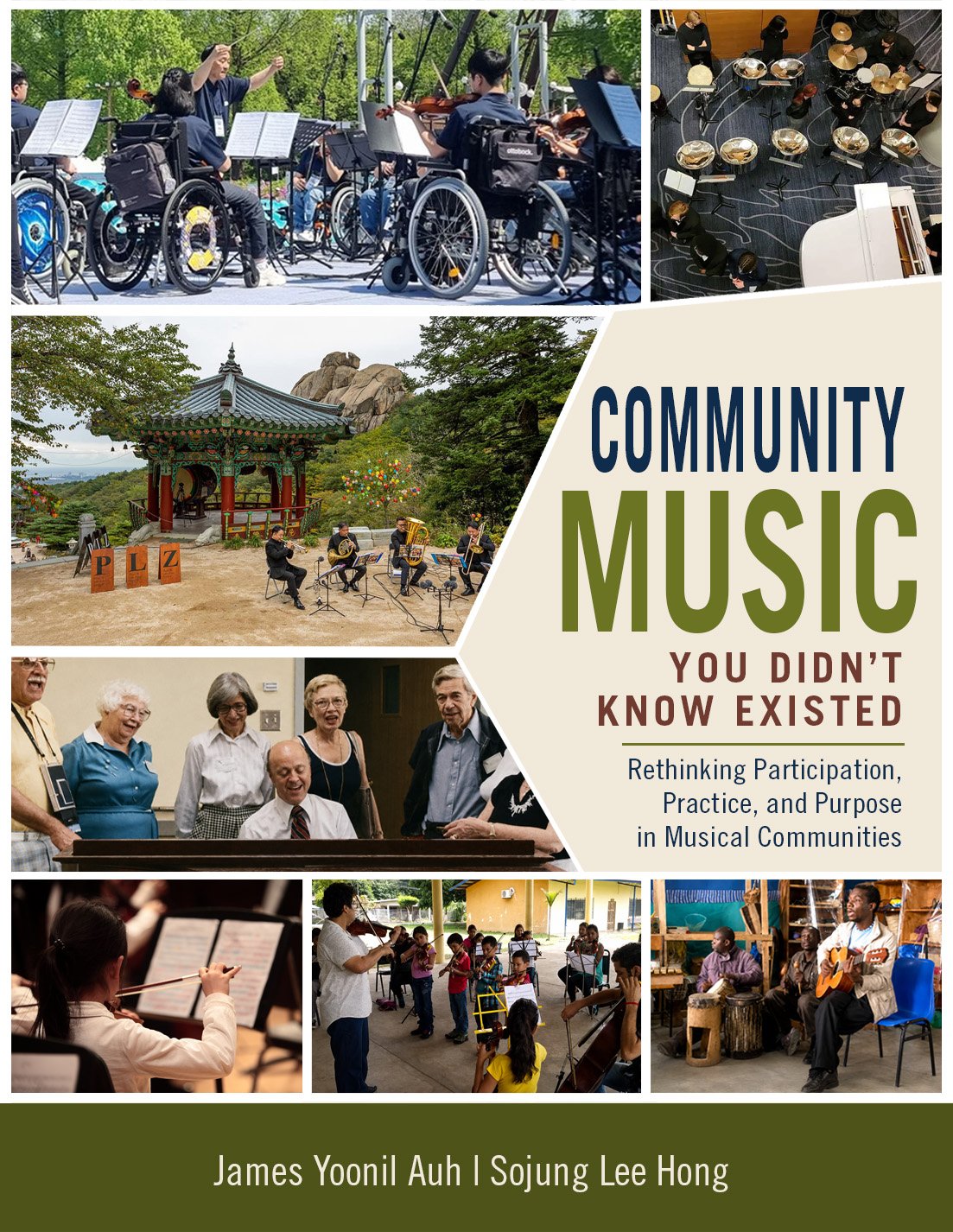
Community Music You Didn't Know Existed
Product Details
Paperback: 508 pages
Publisher: Clifton Hills Press, Inc.
Publication Date: August 4, 2026
Language: English
ISBN-13: 979-8999734235
Product Dimensions: 8.50 x 11 inches
Part I reframes the field by challenging “stage logic” and shifting attention from performance as spectacle to music as a relational practice. It advances a more democratic account of musical life, in which participation, presence, and human connection—not formal stages—define where music matters.
Part II moves into places rarely recognized as musical—shelters, sanctuaries, sidewalks, and sites of care—revealing music not as a discretionary program but as a condition of survival, memory, and continuity. Across precarious and intergenerational contexts, it shows how music sustains identity, preserves knowledge, and enables communities to endure and to reconstitute themselves.
Part III interrogates power, identity, and resistance across diasporic, disabled, Indigenous, and postcolonial contexts, asking not only who gets to sing but also who is heard, who is translated, and who is systematically erased. It critiques dominant pedagogies while reimagining where music lives—beyond institutions and within communities that sustain their own sonic and cultural authority.
Part IV turns to forms of learning that precede and transcend formal instruction, examining how musical knowledge emerges in the wild—informally, relationally, and intuitively. It reframes teaching as facilitation, making listening, care, and presence central pedagogical acts rather than supplementary.
Part V turns to civic imagination, reframing music as a site of cultural citizenship, social repair, and future-making. It extends this vision by grounding community music in ethical inquiry, demonstrating how musicking practices raise questions of justice, responsibility, and human dignity. Drawing on civic, spatial, and theological perspectives—including Biblical ethics—it shows how urban soundscapes, public infrastructures, place-making, and community foresight become co-musicians in collective life.
Part VI, a major intervention in both community and classical music scholarship, argues that the orchestral tradition, long treated as elite, distant, and exclusionary, holds immense yet overlooked civic potential. Through a nuanced comparison of professional symphonies and community ensembles, these chapters show how classical music can be re-rooted in community ecologies, becoming a site of participation, civic imagination, and musical commons rather than hierarchy.
Throughout the book, the authors shift the center of gravity from teaching to listening—from delivering content to attending to places, histories, and communities. They argue that listening is not passive but ethical and political: a willingness to be transformed by what one encounters, especially when those voices have long been dismissed or unheard.
The book concludes with a powerful claim:
Community music was never quiet. We simply failed to hear it.
The work of musicians, educators, policymakers, cultural workers, and scholars is not to invent community music, but to recognize, honor, and resource the vibrant sonic worlds that already sustain people across the globe.
At once rigorous and accessible, critical and compassionate, Community Music You Didn’t Know Existed forges a new foundation for the field—one that centers on relationship over repertoire, place over performance, and listening over mastery. It is essential reading for anyone seeking to understand how music shapes cultural citizenship, social repair, ecological belonging, and the collective imagining of more just futures.
Description
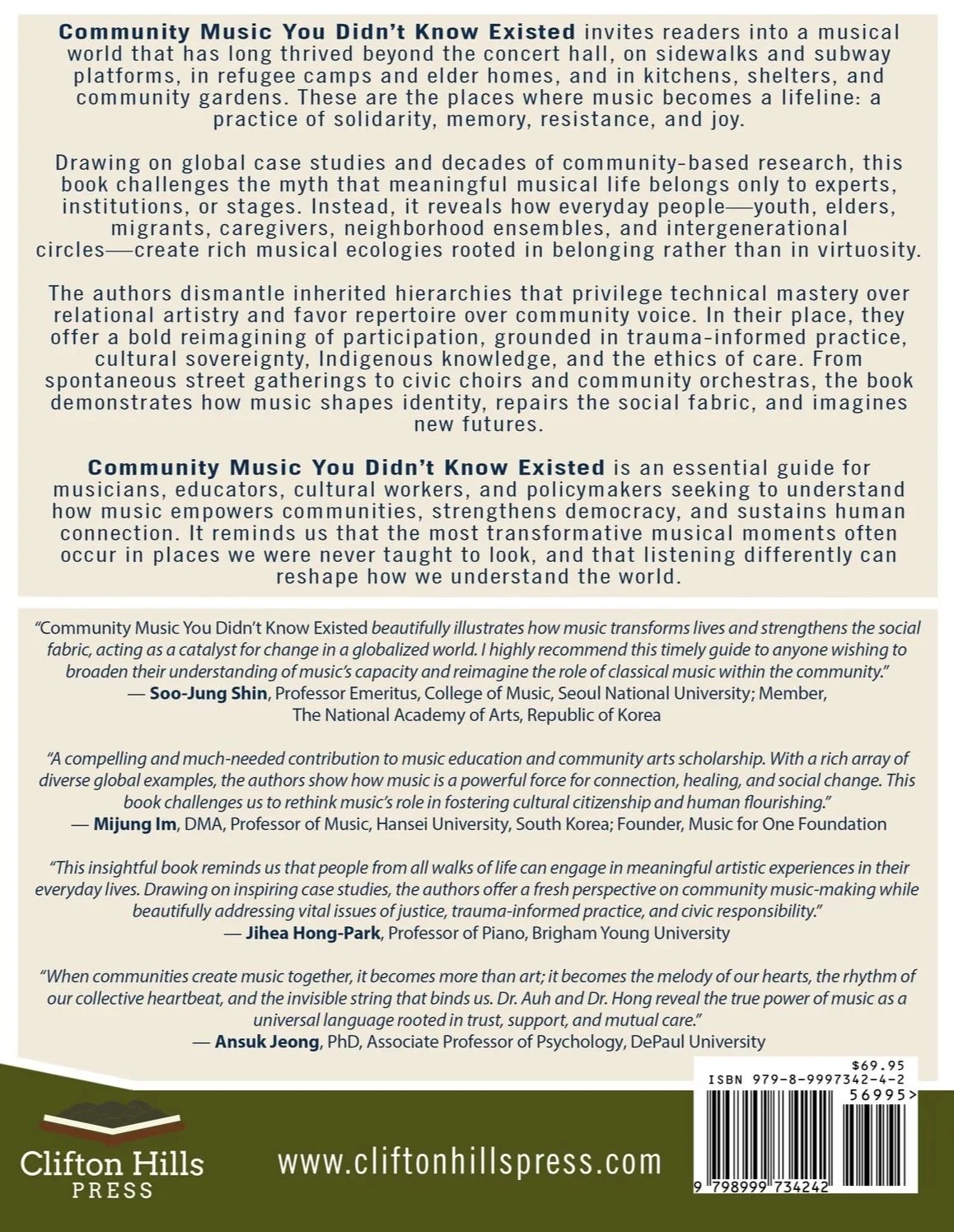
Community Music You Didn’t Know Existed reframes what music is, where it lives, and to whom it belongs. Challenging the dominance of recital halls, conservatory norms, and the performance-driven “stage logic” that has shaped Western music education for generations, this book reveals a vast, overlooked world of musicking that has thrived all along—on sidewalks, in refugee camps, elder homes, community kitchens, transitional shelters, and neighborhood squares. These are not marginal spaces. They are the beating heart of human musicality, where sound becomes a mode of survival, belonging, cultural memory, and collective presence.
Drawing on case studies from Brazil, Colombia, Myanmar, India, Palestine, Indigenous communities in Canada and Australia, Afro-diasporic ensembles, community choirs, women’s collectives, street ensembles, and intergenerational gatherings, the book shows that community music emerges most profoundly where systems fail and where dignity, safety, and public voice are contested. In these spaces, music is less about performance and more about care, resistance, identity, healing, and the right to be heard.
Across six parts, the authors dismantle inherited hierarchies that privilege virtuosity, the written repertoire, and institutional authority. They present a new intellectual map for the field, shaped by relational aesthetics, decolonial theory, the ethics of care, Indigenous knowledges, trauma-informed practice, everyday creativity, and the sociology of sound.